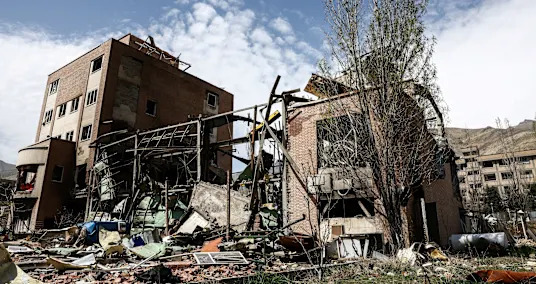
In Tehran, a city of nine million people, schools are closed, businesses are shuttered or struggling, and locals are living without a functioning air-raid warning system or public shelters. In many areas, the first sign of an incoming strike is the explosion itself.
There have been twice as many US and Israeli attacks on Iran compared to the number of Iranian retaliatory strikes since the war began — and the numbers killed in Iran have been orders of magnitude greater than in the neighboring Gulf states. A nationwide internet blackout, now entering its second month, has left civilians unable to access information about safety, shelter, and food and has meant some are unable to work. But while millions have fled Iran’s cities, many more are staying where they are. Some residents are hoping the US and Israeli bombs will cause the regime to collapse; others are left wondering if they are at risk if their neighbors are targeted.
For the many Iranians with ties to Dubai, there are other pressures, with Iranian nationals now barred from entering or transiting through the UAE. Residency permits, even for those with long-term Golden Visas, are reportedly being revoked without notice.

LATEST POSTS
- 1
 Find the Excellence of Old style Expressive dance: Encountering the Effortlessness and Polish of Dance
 - 2Somalia set for 'historic' first offshore oil drilling
- 3Artemis will take Americans to the moon for the 1st time since 1972. Why has it been so hard to go back?
- 4Czech Republic's new premier: No money for Ukraine
- 5Innospace's rocket crashes in first commercial launch in Brazil; shares tumble





- New nesting beach for birds at RSPB reserve
- An Excursion Through Renowned Western Network programs
- Dark matter obeys gravity after all — could that rule out a 5th fundamental force in the universe?
- Step by step instructions to Buy a Jeep Wrangler on a Senior's Spending plan
- What Yogurt Types Do You Know
- Marvel's X-Men are joining the battle in 'Avengers: Doomsday': Watch the teaser
- 6 Famous Urban communities for Shopping on the planet
- Nine in 10 German industrial firms expect Iran war to hit business
- Doulas play essential roles in reproductive health care – and more states are beginning to recognize it