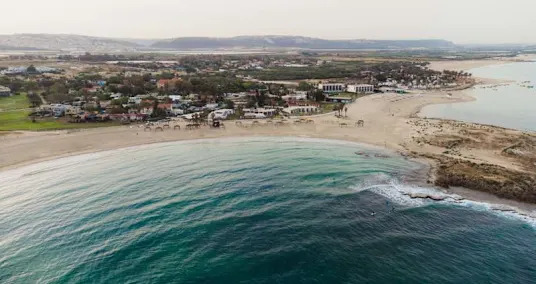
The discovery was made in an ancient shipwreck in the Dor Lagoon near the Carmel Coast, where archaeologists recovered nine pieces of unprocessed iron known as “blooms.”
Researchers from the University of Haifa said Wednesday that an underwater excavation off Israel’s northern Mediterranean coast uncovered what they described as the earliest known cargo of raw iron transported by ship, dating back around 2,600 years, Xinhua reported.
The discovery was made in an ancient shipwreck in the Dor Lagoon near the Carmel Coast, where archaeologists recovered nine pieces of unprocessed iron known as “blooms.” According to the university, the find provides direct evidence of how iron was transported in its earliest commercial stages.
The material was preserved in its original form, having solidified directly in a smelting furnace without undergoing forging or further refinement. Researchers said this distinguishes the cargo from later iron artifacts that typically show signs of shaping or tool-making.
Unlike copper and bronze, which could be melted into liquid form in ancient production processes, iron was heated with charcoal to produce a solid, porous mass. That mass was generally hammered to remove impurities and create denser material suitable for tools and implements.
The recovered blooms showed no indication of that secondary processing stage, suggesting they were transported immediately after production.

Earliest iron shipment discovered in ancient Mediterranean wreck
To determine the age and condition of the cargo, researchers conducted microscopic and chemical analyses.
Radiocarbon dating was also carried out on charred wood embedded in one of the pieces, helping confirm the timeline of the shipment. The findings were published in the journal Heritage Science.
Researchers said the cargo indicates that iron was being moved in raw form from production sites to other locations for further processing, pointing to a level of specialization in ancient manufacturing and trade networks in the Mediterranean.
The University of Haifa said the discovery provides new insight into early iron production and distribution practices in the region.
LATEST POSTS
- 1
 Warnings rise for U.S. as severe flu strain causes outbreaks in Canada, U.K.
 - 2Purdue Pharma's deal means money for some victims, end of Purdue company name. Here's what to know
- 3Can ICE agents detain U.S. citizens? What powers do they have to arrest people? Your most common questions answered.
- 4Which European palace do you fantasy about visiting? Vote!
- 5The Specialty of Compromise: Examples from Reality


- People are getting their news from AI – and it’s altering their views
- Eurasian cargo hub expands to capture Europe-Asia freight flows
- ‘Wicked: For Good’ streaming release — How to watch the sequel starring Ariana Grande and Cynthia Erivo
- The most effective method to Arrange a Higher Medical caretaker Pay During Your Next New employee screening
- The most effective method to Guarantee Simple Availability in Seniors' SUVs
- IDF strikes Tehran command centers, weapon production sites
- Find the Insider facts of Viable Advertising: Building a Positive Brand Picture
- Most loved Amusement Park Firecrackers Show: Which One Lights Up Your Evening?
- The Best Internet based Courses for Expertise Improvement