Russia’s only crewed-mission launch site has suffered major damage following a rocket launch on Thursday.
The Baikonur Cosmodrome in Kazakhstan will be unable to host launches until repairs are made, according to the space agency Roscosmos, marking the first time in decades that Russia has lost the ability to send people to space.
The launch of the Soyuz MS-28 spacecraft was otherwise successful, with none of the crew members injured.
The three-person crew, which included Nasa astronaut Chris Williams and two Russian crewmates, made it safely to the International Space Station (ISS) on Thursday evening.
Roscosmos shared footage of the launch, which showed part of the launchpad collapse into an exhaust trench below as a result of the rocket’s blast.
The space agency said that “damage to a number of elements of the launchpad was detected” following the launch.
“The launch complex’s condition is currently being assessed,” Roscosmos told state media. “All necessary backup components are available for restoration, and the damage will be repaired in the near future.”
The Independent has reached out to Roscosmos for more information.
Analysts have questioned the timeframe for repairs, with critical cabling, sensors and other sections of the launchpad’s service bay believed to be destroyed.
“This is the only launchpad Roscosmos uses for the ISS program, and in the future it was supposed to be used for launches to the Russian Orbital Station,” Russian space commentator Vitaliy Egorov wrote on Telegram.
“In effect, from this day Russia has lost the ability to launch humans into space, something that has not happened since 1961. Now it will be necessary to quickly repair this launchpad or modernise another one.”
The Soyuz crew will spend eight months aboard the ISS before returning to Earth in July 2026.
Russia is currently developing its own independent orbital outpost, called the Russian Orbital Service Station (ROSS), with the ISS set to be decommissioned in 2030.
The first ROSS module is planned for launch in 2027.
LATEST POSTS
- 1
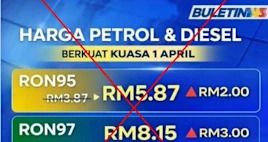
 False fuel prices in fabricated graphics circulate in Malaysia as Iran war continues
 - 2The Best Cell phone Brands for Tech Aficionados
- 3Broken toilet, T-shirts on windows and collecting saliva: The weirdness of daily life aboard Orion
- 4Industrial zone damaged in Negev, falls in Sharon area after Iran fires missiles towards Israel
- 5Was it a stone tool or just a rock? An archaeologist explains how scientists can tell the difference


- Magnetic fossils may reveal ancient creature's internal 'GPS system'
- 10 times the sky amazed us in 2025
- 2024 Ferrari Roma With Just One Owner & 3,300 Miles For Sale At $...
- A quick recap of 'Stranger Things' Seasons 1-4, plus key episodes to rewatch before Volume 1 of the final season drops
- AstraZeneca to acquire Modella AI to speed oncology drug research
- Pick Your Number one Sort Of Music
- 15 Outrageous Cosplay Outfits That Will Blow You Away
- Reality TV star Spencer Pratt, who lost his home in Palisades Fire, is running for mayor of Los Angeles
- The most effective method to Guarantee Simple Availability in Seniors' SUVs